- Restorative


Advances in dental materials and clinical techniques have made replacing missing teeth more predictable and natural-looking than ever. While solutions such as dental implants and fixed bridgework are excellent choices for many patients, removable dentures continue to offer a dependable and versatile way to restore a complete, functional smile.
At the office of Atrium Cosmetic & Family Dentistry, we design dentures with careful attention to fit, contour, and appearance. A well-made denture supports facial structure, helps you speak and chew with confidence, and is tailored to the individual needs of each patient.
Our team focuses on clear communication and step-by-step planning so you understand what to expect from consultation through follow-up care. Whether you need a partial replacement or a full arch solution, we prioritize comfort, function, and a natural look.
Losing one or more teeth is common and can happen for many reasons, including decay, gum disease, injury, or medical conditions. Beyond the visible gap, missing teeth change how your bite functions and how your face is supported. Over time, these changes can make chewing less efficient and lead to extra wear or movement of the remaining teeth.
When teeth are missing, the jawbone in that area loses stimulation and can begin to remodel. This bone change affects how dentures fit and can alter facial contours, sometimes making the lower face appear shorter or less supported. Replacing teeth helps preserve oral function and slows the secondary changes to bone and soft tissues.
There are also social and practical consequences: difficulty articulating certain words, avoiding favorite foods, or feeling self-conscious about a smile. Addressing tooth loss with an appropriate restoration can restore confidence and make everyday activities like speaking and eating more comfortable.

Dentures are removable prosthetic devices that replace missing teeth and the surrounding gum tissue. They consist of artificial teeth set into a base that mimics the contours of your gums. Today's denture materials and processes allow for lifelike tooth shapes, realistic shades, and comfortable bases that adapt to the unique anatomy of each mouth.
Removable dentures can be a practical option when several teeth are missing, when the remaining teeth are not suitable for a fixed restoration, or when a patient prefers a non-surgical approach. One of the advantages of removable appliances is the ability to remove them for cleaning, which helps maintain the health of the oral tissues and any remaining natural teeth.
Although removable by design, dentures can be highly stable. When needed, they can be enhanced with devices such as attachments on natural teeth, implant-supported anchors, or specialized adhesives. These options increase retention and make the denture feel more secure during speaking and eating.
Choosing the appropriate denture depends on how many teeth remain, the health of those teeth, jawbone condition, and your personal goals. Our approach begins with a careful clinical exam and imaging so we can evaluate support structures, bite relationships, and tissue health. From there we discuss options that best balance comfort, function, and aesthetics.
Complete and partial dentures are the two primary removable categories. Complete dentures replace all teeth in an arch, while partial dentures bridge gaps when some natural teeth remain. Each path has several variations, and the ideal design is guided by a patient’s oral health and lifestyle needs.
Complete dentures are used when a full upper or lower arch (or both) needs replacement. A conventional complete denture is fabricated and inserted after the gums have healed following extractions, which allows for an accurate fit once tissues have settled. This process emphasizes precise impressions and careful try-ins to achieve proper tooth position and bite.
Immediate dentures
An immediate denture is placed the same day teeth are removed, so a patient does not go without teeth during the healing phase. It is a transitional solution—over time, the underlying tissues will change and the denture often requires relining or adjustment to maintain comfort and fit.
Overdentures
Overdentures gain retention from existing tooth roots or specially prepared attachments on remaining teeth. Preserving select roots can provide improved stability and proprioception, and helps maintain bone levels where possible.
Implant-supported dentures
For additional security, a denture can be anchored to dental implants placed in the jaw. This option dramatically increases retention and function, especially on the lower jaw where stability is often harder to achieve with conventional dentures.
Partial dentures replace one or several missing teeth and attach to the remaining natural teeth with clasps or precision attachments. They not only restore the look of a complete smile but also prevent neighboring teeth from drifting into the empty spaces, which can compromise bite and overall oral health.
Modern partial frameworks can be made from a variety of materials, including cast metal alloys, flexible resins, or hybrid options that combine strength and esthetics. The choice of material affects weight, durability, and how discreet the appliance appears while worn.
Whatever design you choose, careful planning ensures the partial integrates with your bite and existing dental work. We tailor the shape and tooth selection to blend with your smile and to minimize any impact on adjacent teeth.
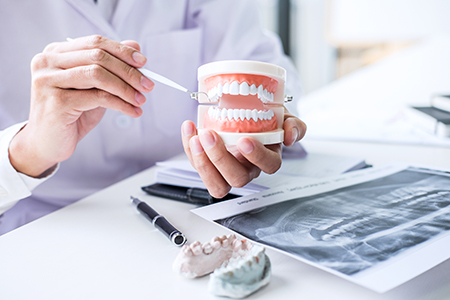
Creating a successful denture is a blend of clinical science and careful craftsmanship. Our process begins with a comprehensive review of your dental and medical history, a thorough intraoral exam, and any necessary imaging to assess bone and tissue conditions. This foundational step informs the treatment plan and sets realistic expectations.
When teeth need to be extracted prior to denture fabrication, we coordinate timing so healing and tissue contours are favorable for a predictable outcome. For patients who may benefit from implant support, we discuss surgical planning and how implant placement will be integrated into the prosthetic design.
Dentures are made through a sequence of impressions, framework try-ins (for partials or metal-based bases), tooth selection, and bite registrations. Each step is an opportunity to refine fit, polish aesthetics, and ensure the restoration works harmoniously with surrounding tissues and natural teeth.
Follow-up is part of the plan. After insertion, adjustments and relines can fine-tune comfort and function as tissues continue to settle. Routine exams help us monitor tissue health, check the fit, and address any concerns before they become problems.

Adapting to a new denture takes time and patience. Early on you may notice increased saliva, changes in speech, or tender areas that require minor adjustments. These are normal responses and usually improve within days to a few weeks as the mouth learns to function with the prosthesis.
We encourage patients to practice speaking and to begin with softer foods when eating. Chew evenly on both sides and take smaller bites as you regain confidence. If soreness develops, wearing the denture a short time before your adjustment appointment helps us locate and relieve pressure points.
Daily cleaning is essential: rinse and brush the denture after meals and soak it overnight in water or a recommended cleanser. Maintain oral hygiene for any remaining teeth and regularly clean the gums and tongue to support tissue health. Removing the denture at night gives oral tissues a period of rest and helps reduce the risk of irritation.
Relines and maintenance
Over time, changes in the jaw and gums can alter the fit of a denture. Relines and periodic adjustments restore fit and comfort without having to remake the entire appliance.
When added retention helps
In some cases, adhesives or implant attachments are recommended to improve stability. We evaluate each mouth individually to determine whether these enhancements will meaningfully improve daily function.
Routine checkups
Regular dental visits allow us to assess tissue health, examine the condition of any remaining teeth, and evaluate the denture’s fit. Preventative care supports long-term comfort and oral health.
At Atrium Cosmetic & Family Dentistry, our goal is to provide denture solutions that are comfortable, durable, and natural in appearance. We take time to explain options, tailor each appliance to an individual's needs, and follow through with attentive aftercare.
In summary, dentures remain a valuable and adaptable option for restoring missing teeth. If you would like to learn more about whether a partial or full denture is right for you, or how implant support might improve your results, please contact us for more information.
Dentures are removable prosthetic devices that replace missing teeth and the surrounding gum tissue. They consist of artificial teeth set into a base that mimics the contours of the gums and are fabricated to match tooth shape, shade, and bite relationships. Modern materials and techniques allow for natural-looking teeth and bases that conform closely to each patient's anatomy.
Well-designed dentures restore chewing ability and support speech by reestablishing tooth contacts and soft-tissue support for the lips and cheeks. Although removable by design, dentures can be stabilized with attachments, adhesives, or implant anchors to improve retention and comfort. Proper fit and planning help maintain facial contours and overall oral function.
Good candidates for dentures include people who have lost several teeth, those with uneven tooth distribution, or patients who prefer a non-surgical prosthetic option. Selection depends on the health of remaining teeth, the condition of the gums and jawbone, bite relationships, and the patient's general health and treatment goals. Some medical or anatomical factors may require additional planning or alternative approaches.
Dentures are also appropriate when fixed bridgework or implant solutions are not practical due to dental anatomy, existing restorations, or patient preference. When implant-supported options are under consideration, surgical evaluation and imaging will be part of the planning process. A comprehensive exam helps determine the safest and most predictable path forward.
Complete dentures replace all teeth in an upper or lower arch and are used when a full arch is missing. Conventional complete dentures are fabricated after tissues have healed following extractions for the best fit, while immediate dentures provide a temporary replacement on the day of extraction. Accurate impressions, careful tooth arrangement, and proper bite registration are critical for functional and aesthetic results.
Partial dentures fill gaps when some natural teeth remain and typically attach to adjacent teeth using clasps or precision attachments. They prevent neighboring teeth from drifting into empty spaces and help preserve proper bite relationships. Partial frameworks may be made from cast metal, flexible resin, or hybrid materials chosen to balance strength, weight, and esthetics.
An immediate denture is placed on the same day teeth are extracted so the patient does not go without teeth during the healing period. It serves as a transitional solution and often requires relining or adjustment as tissues remodel and heal. Patients who receive immediate dentures are scheduled for follow-up visits to refine fit and comfort as recovery progresses.
An overdenture gains retention from preserved tooth roots or specially prepared attachments on remaining teeth, which can improve stability and help preserve bone. Implant-supported dentures are anchored to dental implants and provide enhanced retention and chewing efficiency, especially for lower-arch prostheses where conventional stability is harder to achieve. The best choice depends on oral anatomy, restorative goals, and the patient's health status.
Dental implants act as stable anchors that secure a denture to the jaw, significantly reducing movement during speech and eating compared with conventional removable appliances. Implant-supported dentures transmit functional loads to the bone, which can help preserve jawbone volume and improve chewing efficiency. Many patients experience greater comfort and confidence with implant-retained prostheses.
Implant placement requires adequate bone volume and a surgical assessment to determine implant number and position. In the lower jaw, two or more implants often provide excellent retention for a removable overdenture, while additional implants may be recommended for broader support in the upper arch. A coordinated restorative and surgical plan ensures implants are integrated effectively into the prosthetic design.
At the office of Atrium Cosmetic & Family Dentistry the process begins with a comprehensive consultation, medical and dental history review, and any necessary imaging to evaluate bone and soft-tissue conditions. This initial assessment establishes treatment goals for comfort, function, and appearance and guides decisions about extractions, immediate appliances, or implant support. Clear communication during this phase sets expectations for timing and follow-up care.
Denture fabrication proceeds through a series of steps, including impressions, bite registrations, framework try-ins for partials, tooth selection, and final try-in to refine fit and aesthetics. Each step allows for adjustments to ensure the restoration integrates with surrounding tissues and the patient's bite. After insertion, scheduled follow-ups address relines, minor adjustments, and ongoing maintenance for long-term success.
Adapting to new dentures typically takes from a few days to several weeks and varies by individual, the type of denture, and prior tooth history. Early symptoms may include increased saliva, changes in speech, or tender spots that usually improve with short-term adjustments. Practicing speaking aloud and starting with soft, manageable foods can accelerate the learning curve.
Chew slowly and distribute pressure evenly by using both sides of the mouth as you regain confidence, and report persistent soreness or functional difficulties to your dentist promptly. Immediate dentures often need relines as tissues heal, so follow-up visits are important to maintain comfort and fit. Routine monitoring helps ensure adaptation progresses smoothly and that the prosthesis remains effective over time.
Daily care includes rinsing and brushing the denture after meals to remove food particles and plaque, and soaking it overnight in water or a recommended denture cleanser to keep the base hydrated. Use a soft denture brush and nonabrasive cleaner specifically made for dentures to avoid surface damage. Avoid hot water, which can warp acrylic bases, and remove any adhesive residues according to product instructions.
Maintain oral hygiene for any remaining natural teeth by brushing and flossing, and gently clean the gums, tongue, and palate to support tissue health. Removing dentures at night provides the oral tissues with a rest period and can reduce the risk of irritation. Bring your denture to regular dental visits so the team can assess fit, tissue condition, and the prosthesis' overall condition.
Over time, changes in the jaw and gums can alter how a denture fits, causing looseness, sore spots, or decreased chewing efficiency. Relining replaces the denture's internal surface to match current tissue contours and often restores fit without remaking the entire appliance. Minor repairs, such as replacing a cracked tooth or repairing a fractured base, are commonly handled in the dental office to restore function quickly.
If a denture shows extensive wear, repeated fractures, or cannot be satisfactorily relined, fabricating a new denture may provide a more predictable long-term outcome. Regular checkups help identify problems early so relines or repairs can be performed before function or tissue health is compromised. Your dental team will recommend the most appropriate maintenance or replacement plan based on the prosthesis condition and your oral health.
Properly designed dentures support facial tissues and can help preserve the contours of the lower face following tooth loss, improving both function and appearance. They restore chewing and speech capabilities while, in the case of partial prostheses, helping to stabilize adjacent natural teeth and preserve bite relationships. Because the jawbone loses stimulation without natural tooth roots, regular monitoring is necessary to address ongoing changes in bone and soft tissues.
Integrating denture care with routine preventative visits allows the dentist to monitor tissue health, evaluate fit, and recommend enhancements such as relines or implant support when appropriate. Maintaining oral hygiene for remaining teeth and attending periodic professional evaluations reduces the risk of complications and supports long-term comfort. Consistent professional oversight and proper daily care are key to sustaining oral health and prosthesis function over time.
Quick Links
