- General


Being told a tooth needs root canal therapy can feel unsettling, but modern endodontic care is focused on relief, precision, and preserving what nature gave you. For many people, a root canal is the best path to stop pain, remove infection, and keep their natural tooth stable and functional for years to come.
At Atrium Cosmetic & Family Dentistry, our approach combines thoughtful diagnosis with gentle, evidence-based treatment to restore comfort and protect your oral health. We work to make the process understandable and as comfortable as possible so you can make informed choices about your care.
Root canal therapy is designed to address problems deep inside a tooth—the soft tissue and nerve that can become inflamed or infected after decay, injury, or repeated dental work. When the inner tissue is compromised, removing the diseased material and sealing the canals stops the spread of infection and prevents further damage to surrounding teeth and bone.
Choosing to save a natural tooth whenever feasible has clear advantages. A preserved tooth maintains chewing efficiency, helps keep adjacent teeth in place, and avoids the long-term consequences that can accompany extraction, such as shifting teeth or the need for more extensive restorative dentistry.
Thanks to advances in local anesthesia, precise instrumentation, and improved filling materials, root canal treatment today is routinely predictable and focused on patient comfort. We prioritize techniques that reduce post-procedure sensitivity, protect the remaining tooth structure, and set the stage for a strong, lasting restoration.

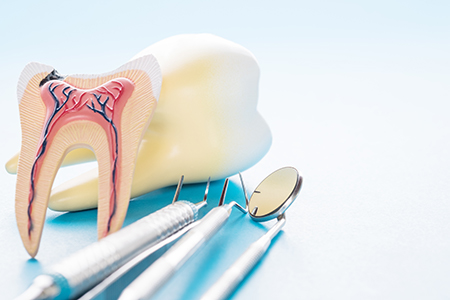
Teeth are composed of hard outer layers and an inner chamber that contains the dental pulp—a network of nerves, blood vessels, and connective tissue. The pulp helps a tooth develop and provides sensory feedback. When that tissue becomes irritated or infected, your body often responds with recognizable symptoms that indicate it’s time to seek dental care.
Common early signals include lingering sensitivity to hot or cold, pain when biting or chewing, and a persistent toothache that does not resolve on its own. These sensations reflect the pulp’s distress and should prompt a thorough clinical and radiographic evaluation to determine whether root canal therapy or another treatment is appropriate.
Sometimes a tooth with a compromised pulp shows no obvious pain but reveals signs on an x-ray, such as changes around the root tip, or presents with discoloration after trauma. Timely diagnosis allows us to treat the problem before it progresses and to plan a restoration that preserves function and appearance.

Addressing pulpal disease without unnecessary delay reduces the chance that an infection will spread into surrounding bone or adjacent teeth. Early treatment often requires less intervention and improves the odds for a straightforward recovery. Conversely, postponing care can allow a localized issue to become more complex and harder to manage.
Prompt treatment also helps preserve the maximum amount of healthy tooth structure. The more we can save, the better the long-term prognosis for that tooth and the simpler the final restoration will be. Timely care supports a faster return to comfortable eating and everyday activities.
When you arrive with symptoms or after a routine exam reveals a problem, our goal is to explain findings clearly, outline realistic treatment steps, and answer questions so you know what to expect. We balance clinical prudence with a focus on comfort and predictability.
A root canal appointment begins with a careful exam and the application of local anesthetic so the procedure is comfortable. After isolating the tooth, the dentist creates a small access opening and gently removes the inflamed or infected pulp tissue from the chamber and canals using specialized instruments designed for precision.
Once the internal spaces are cleaned and shaped, they are irrigated to remove debris and reduce bacterial presence. The canals are then dried and filled with a biocompatible material that seals the space to prevent reinfection. In many cases a temporary filling is placed while the tooth prepares for its final restoration.
The complexity of the tooth—how many canals it has, its anatomy, and whether an active infection exists—determines whether treatment is completed in a single visit or requires multiple visits. Throughout, our focus is on sterile technique, comfortable care, and preserving strength so the tooth can be restored permanently.
Following a root canal, it is normal to experience some tenderness or mild discomfort as nearby tissues heal. This typically improves over days and can be managed with over-the-counter pain relievers as directed by your dentist. We provide clear guidance on what to expect and how to manage any temporary sensitivity.
Because a tooth that has been treated may be more prone to fracture before it receives its final restoration, placing a permanent crown or appropriate restoration in a timely manner is important to restore strength and function. Maintaining good oral hygiene and attending scheduled follow-up visits helps ensure the longevity of the treated tooth.
At Atrium Cosmetic & Family Dentistry, we emphasize a coordinated treatment plan that moves from symptom relief and infection control to durable restoration. If you notice increasing pain, swelling, or any signs that concern you after treatment, contact our office promptly so we can evaluate and address the issue.
With proper treatment and attentive aftercare, a tooth that has undergone root canal therapy can remain symptom-free and functional for many years. Our team focuses on predictable techniques and individualized care to help you keep a healthy, natural smile.
Summary: Root canal therapy is a reliable, tooth-preserving treatment that relieves pain, eradicates infection, and restores oral function. If you have symptoms or have been advised that a tooth may need endodontic treatment, contact us for more information and to discuss the next steps toward restoring your comfort and oral health.
Root canal therapy is a dental procedure that removes diseased or inflamed pulp from inside a tooth to stop infection and preserve the natural tooth. The pulp contains nerves and blood vessels that can become compromised by deep decay, trauma, or repeated dental work. Treating the pulp helps prevent the spread of infection to surrounding bone and adjacent teeth.
Saving a natural tooth when possible maintains chewing function and bite alignment and avoids the need for more complex replacements. Modern techniques focus on removing infected tissue while preserving as much healthy structure as possible. Early diagnosis and treatment generally improve the long-term prognosis for the tooth.
Common symptoms that suggest a problem in the tooth pulp include lingering sensitivity to hot or cold, pain when biting or chewing, and a toothache that does not resolve on its own. Swelling of the gum near the tooth, a pimple-like bump, or increased discomfort when pressure is applied can also indicate an infection. These signs warrant a prompt clinical and radiographic evaluation.
Some teeth with pulpal problems cause little or no pain but show changes on x-rays, such as radiolucency at the root tip, or become discolored after trauma. Because symptoms vary, a careful exam and appropriate imaging help determine whether root canal therapy or another treatment is recommended. Timely assessment increases the chance of a straightforward and successful outcome.
Treatment begins with a thorough exam and appropriate local anesthesia so the procedure is comfortable. The dentist isolates the tooth and creates a small access opening to remove inflamed or infected pulp using specialized instruments designed for precision. The internal canal system is cleaned, shaped, and irrigated to remove debris and reduce bacteria.
Once cleaned, the canals are dried and filled with a biocompatible material that seals the space to prevent reinfection, and a temporary restoration is often placed. Depending on the tooth's anatomy and the presence of infection, treatment may be completed in one visit or staged over multiple visits. The tooth is later restored with a permanent restoration to protect structure and restore function.
Thanks to modern local anesthetics, precise instruments, and gentle techniques, most patients experience little to no pain during the procedure. Many people find that the discomfort from the infected tooth itself is greater than any sensation felt during treatment. The clinical team works to ensure your comfort and will adjust anesthesia or use calming techniques as needed.
After the appointment, it is normal to have mild soreness or sensitivity as surrounding tissues heal, and this typically subsides within a few days. Over-the-counter pain relievers and a soft diet can help manage temporary discomfort, and clear post-operative instructions will be provided. Contact the office if you experience increasing pain, swelling, or other concerning symptoms.
Recovery timelines vary but most patients return to normal activities within a day or two, while residual tenderness can last several days. The initial numbness from anesthesia may linger for a few hours, and the treated area may feel sensitive to chewing until the final restoration is placed. Following the dentist's care instructions helps speed healing and reduces the chance of complications.
Avoid chewing on the treated tooth until it has a permanent restoration to prevent fracture, and follow any temporary filling guidance provided by the dental team. If pain increases instead of improving or new symptoms develop, contact the office for an evaluation. Timely placement of a permanent restoration contributes to a more durable long-term outcome.
Many teeth that receive root canal therapy benefit from a crown or other full-coverage restoration to reinforce the remaining tooth structure and reduce the risk of fracture. Posterior teeth that endure heavy biting forces are especially likely to need crowns, while front teeth may be restoratively treated with crowns or other cosmetic options depending on strength and appearance needs. The decision is based on how much healthy tooth remains and the functional demands on that tooth.
Your dentist will discuss the best restoration for your tooth, including material choices and timing, to balance strength and esthetics. Placing a definitive restoration in a timely manner restores chewing efficiency and helps protect the treated tooth for many years. Regular dental checkups ensure the restoration and underlying tooth remain healthy over time.
Although root canal treatment has a high success rate, a treated tooth can sometimes require retreatment because of missed canals, complex anatomy, new decay, or fracture of the restoration. Persistent or returning symptoms, changes on follow-up x-rays, or recurrent infection are reasons to reevaluate the tooth. Early detection of problems improves the likelihood that retreatment or corrective procedures will be successful.
Options for managing a problematic root canal include nonsurgical retreatment, endodontic surgery such as an apicoectomy, or, if necessary, extraction and replacement with a prosthetic. The choice depends on the cause of failure, the tooth's restorability, and overall oral health considerations. Your dentist or an endodontist can explain the expected benefits and potential risks of each approach.
A general dentist can perform many root canal procedures, but complex cases are often referred to an endodontist who specializes in treating the tooth pulp and root anatomy. You may be referred if the tooth has unusual anatomy, previous root canal treatment that failed, or if advanced imaging and microsurgical techniques are likely to improve outcomes. Endodontists have specialized training and equipment to handle difficult cases and enhance precision.
Atrium Cosmetic & Family Dentistry coordinates care closely with specialists when a referral is in the patient's best interest to maintain continuity and predictable results. The practice will share diagnostic information and follow up on treatment plans so the restorative phase proceeds smoothly. Patients benefit from a team approach that prioritizes long-term tooth preservation and comfort.
Preventing the need for a root canal starts with routine oral hygiene and regular dental visits to detect and treat decay before it reaches the pulp. Using fluoride, following a balanced diet low in frequent sugary snacks, and wearing a mouthguard during contact sports can reduce the risk of deep decay and traumatic injury. Promptly addressing small fillings and cracks helps avoid progression to pulpal disease.
Routine exams and periodic x-rays allow the dental team to monitor hard-to-see areas between teeth and under restorations so problems are identified early. If you experience any signs of trouble, such as persistent sensitivity or pain, an early appointment can simplify treatment and improve the odds of preserving the natural tooth. Preventative care is the most effective way to minimize the need for more invasive procedures.
After root canal therapy, regular follow-up appointments are important to confirm healing, evaluate the restoration, and monitor surrounding bone and tissues. Routine clinical exams and periodic x-rays help detect any late changes and ensure the treated tooth remains functional and free of reinfection. Maintaining consistent oral hygiene and attending scheduled visits support the long-term success of the treatment.
Atrium Cosmetic & Family Dentistry's team provides coordinated follow-up care and works with patients at the Costa Mesa and Cypress offices to schedule necessary restorative and monitoring appointments. With proper restoration and maintenance, a treated tooth can remain in service for many years, often indefinitely. If new symptoms arise at any time, contact the office so the situation can be reassessed promptly.
Quick Links
